|
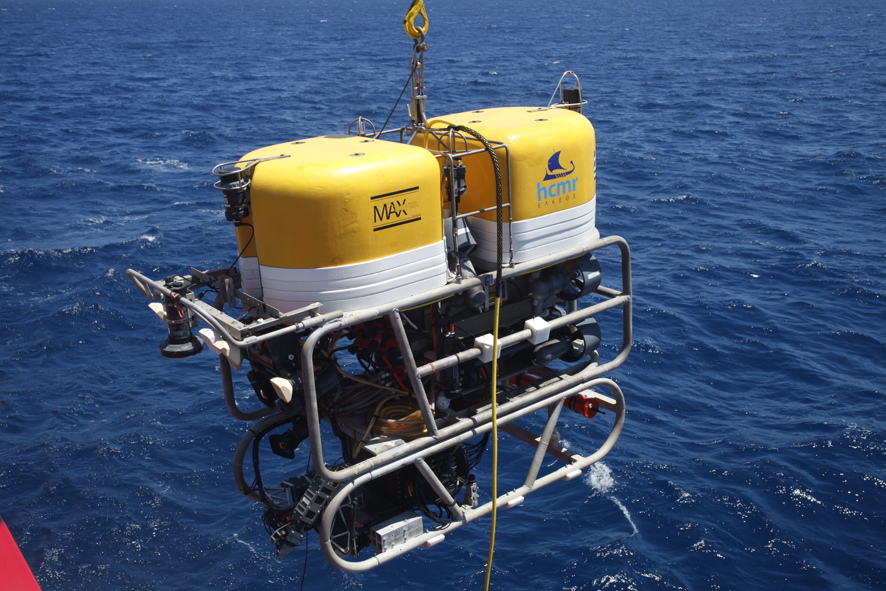
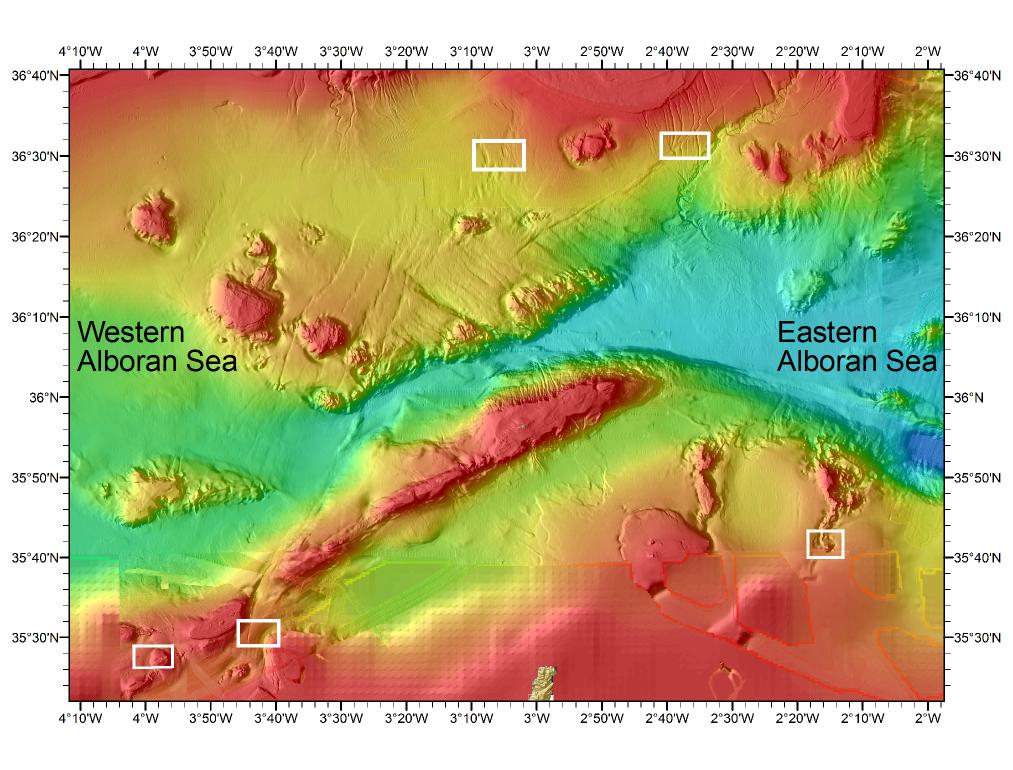
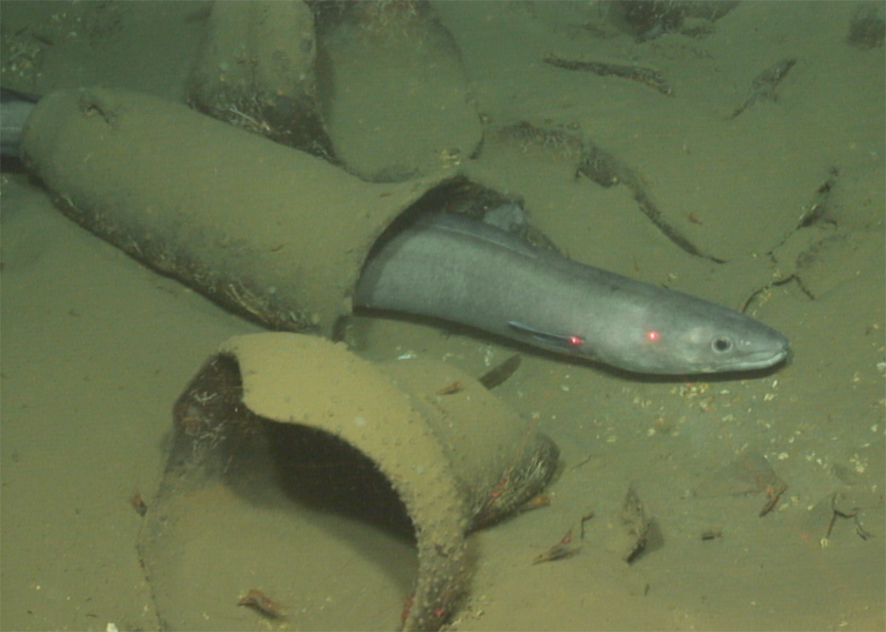
The ROV "Max Rover" is a Remotely Operated Vehicle operated by the Hellenic Centre for Marine Research (HCMR), acquired in 1998 and updated in 2002. The Max Rover has a maximum operating depth of 2000 m. It has 6 electric motors x 2.0 hp, for a resulting underwater speed of approximately 2.5 knots (fwd/rev) and 1.5 knots (vert/lat) with 160 kg bollard pull. Average transect speed on the seabed would be approximately 800 m in one hour. The ROV has several cameras, with main camera an HDTV full frame Colour Camera with zoom lens. Two parallel red lasers with 10 cm separation are used as a spatial reference. Lights are 2 x 100 W HID and 4 x 150 W Quartz. The 2 electro-hydraulic manipulators have 5 functions. The Max Rover is able to collect geological and biological samples from the seafloor and push-cores from the subseafloor. The Max Rover can also collect water samples through a 5 l Niskin bottle and acquires CTD data during the entire dive. Video graphics overlay on surface video include date, time, depth and position. Video footage during IRIS was acquired along dive tracks previously selected from the SHAKE dataset (ultra high resolution AUV bathymetry) with the function of potentially quantify specific morphometric parameters from fault scarps, assess the activity of mapped pockmarks and measure the composition, richness and diversity of the explored reefs. A total of ten dives were performed during IRIS, for a cumulative time of 2074 minutes. Six dives were mainly aimed to detect potential tectonic features (i.e. recent fault scarps, pockmarks), visualize them and collect geological and biological samples. "Geological" dives were carried out on the North-South Faults, on the Carboneras Fault, on the Al Idrissi Fault. Four dives were performed along specific geological features with the aim to visit possible reef forming habitats on top of them (Tofinho and Cabliers Banks).
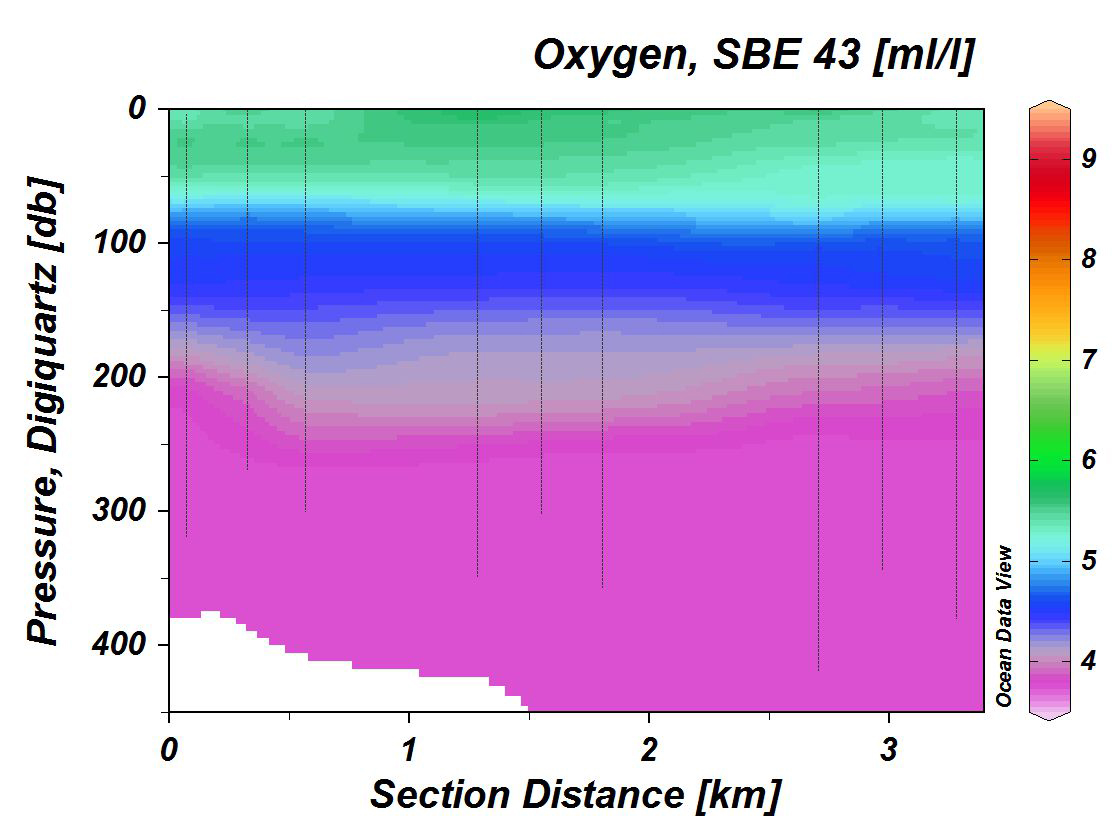
As complementary data, CTD-ADCP (Conductivity Temperature Depth - Acoustic Doppler Current Profiler) casts and seismic Sparker records were acquired along specific areas. The CTD deployed during the IRIS cruise was the Seabird SBE9. The SBE9 can measure conductivity, temperature, dissolved oxygen, fluorescence, turbidity and pressure (i.e. water depth) along the water column. The CTD-rosette was equipped with two Lowered ADCP (L-ADCP) operating at a frequency of 300 KHz: one up-looking (slave) and one down-looking (master). Compared to the standard shipboard ADCP the L-ADCP has the main advantage to acquire in-situ intensities and direction of current.
To record the very high-resolution seismic profiles a Geo-Source 1600 manufactured by GEO Marine Survey Systems was. This Sparker system operates with a 16 kJ pulse power supply in water depths between 2 to 2500 m, with a vertical penetration up to 750 m and a vertical resolution up to 30 cm. The seismic signals were recorded by the Geo-Suite acquisition and processing software. Important information on the subseafloor stratigraphic architecture and tectonic setting were acquired along specific areas of interest.
|
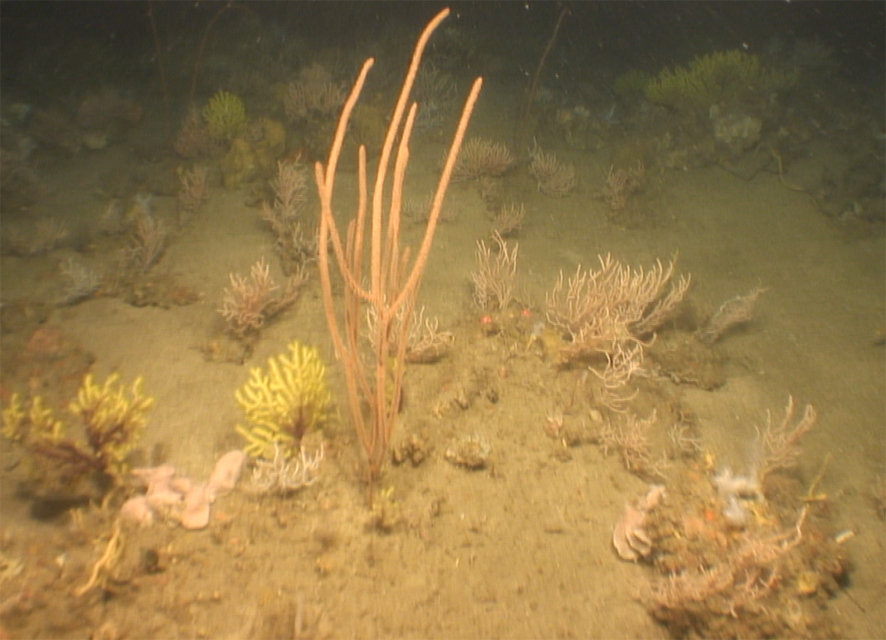
Detail of the gorgonian Elisella paraplexauroides during an IRIS ROV dive (© Dr E. Gracia - CSIC)
|