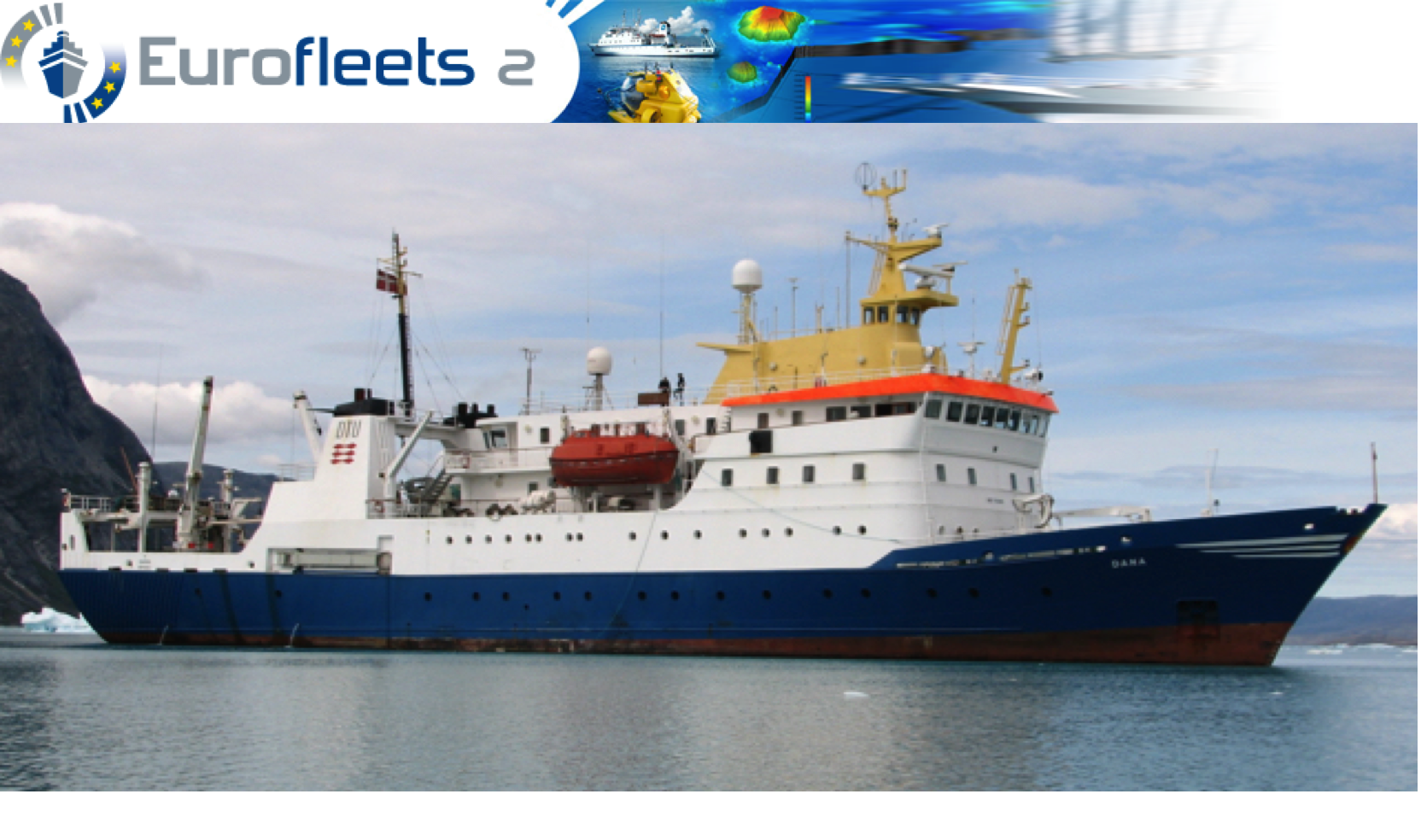
EUROFLEETS2 Floating University course Oceanography@Sea: Practical Aspects of Oceanography
|
|
|
The course offered an introduction to multidisciplinary oceanographic
research techniques with part of the course on board the Danish research
vessel, Dana. It was designed to give students sea-going experience and
a practical introduction to ocean sampling. The course consisted of two
days preparative classroom teaching and training, then five days
sampling on the ship between Tromsø, Norway and Hirtshals, Denmark,
followed by several days working up the data collected and finally a
poster session. Teaching covered five themes in marine science:
hydrography, chemistry, plankton ecology, fisheries and geology.
|
The learning objectives of the course were:
- Identify common pitfalls and necessities with organizing oceanographic sampling.
- Use a CTD probe for measuring the physical properties of seawater.
- Conduct sampling for surface sediments using a coring system.
- Investigate the abundance, diversity and biogeographic distribution of plankton
- Conduct measurements of selected chemical properties of seawater.
- Identification, sampling and recording of pelagic and mesopelagic fishes from a mid-water trawl.
- Integrate and interpret the oceanographic data collected.
- Relate the data collected during the cruise to regional oceanographic phenomena.
|
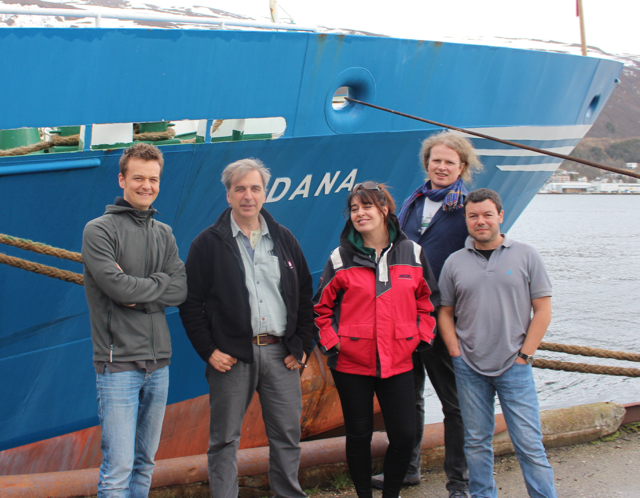
The instructors from EUROFLEETS2 partners were:
Dr. John Boyd (Marine Institute, Ireland; fisheries),
Dr. Andrea Caburlotto (OGS, Italy; geology),
Dr. Pahula McGrane (Marine Institute, Ireland; plankton ecology),
Dr. Colin Stedmon (Technical University of Denmark; course coordinator & nutrient chemistry),
Prof. André Visser (Technical University of Denmark; physics).
|
The course was open for both MSc and PhD students enrolled at
European universities and the call for applications received a total of
198 applicants for the 18 places available. The students selected were
enrolled in degree programs across universities in 8 different European
countries, 8 as MSc and 10 as PhD. The selection was also diverse with
11 different nationalities and a 10:8 split between female and male
participants. Many of the participants had not been on an oceanographic
research vessel before, despite studying marine science. As such the
course offered a great hands-on experience where theory and techniques
learnt in the classroom were put into practice.
On board Dana the
students were split into four groups and rotated between each theme each
day. Biological oceanographic theme covered sampling for plankton and
measuring chlorophyll concentrations using a spectrophotometer. Physical
measurements included operating the CTD, coordinating water sampling
between the groups, communicating with the bridge, and sampling for
salinity calibrations. The chemical oceanography component covered
sampling and analysis of inorganic nutrients in seawater (nitrate,
nitrite, ammonium, phosphate and silicate) and the geological sampling
involved box coring and characterisation of surface sediments. Finally
three pelagic fish hauls were carried out during transit between
stations. On the whole sampling was carried out in the morning and the
samples and data were worked up and analysed during the afternoon while
steaming.
|
|
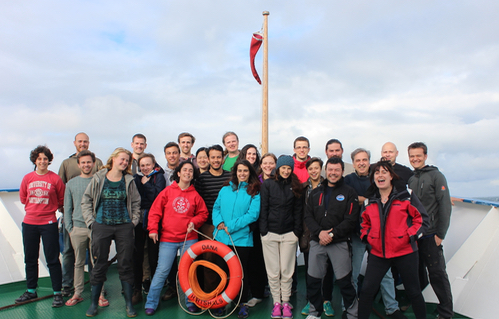
Course participants on-board Dana before arriving in Hirtshals, Denmark after five days at sea.
|
| Upon returning to Copenhagen (DTU) the students were put into five new groups and worked up the data collected within each sampling theme. The results were presented at a public poster session at the National Institute for Aquatic Resources where faculty came and took part in the oral examination.
The end of course evaluation by the students was very positive with 13 students rating their overall satisfaction in the highest category, "Very Satisfied", four were "Satisfied" and one "Neutral". When asked if they thought the course was beneficial for their career, all fully agreed, and the majority would not have been able to attend had EUROFLEETs2 funding not helped cover expenses. This indicates that the initiative successfully reached out to a segment of the European marine science community providing specific practical experience and expanding their European network.
|
|
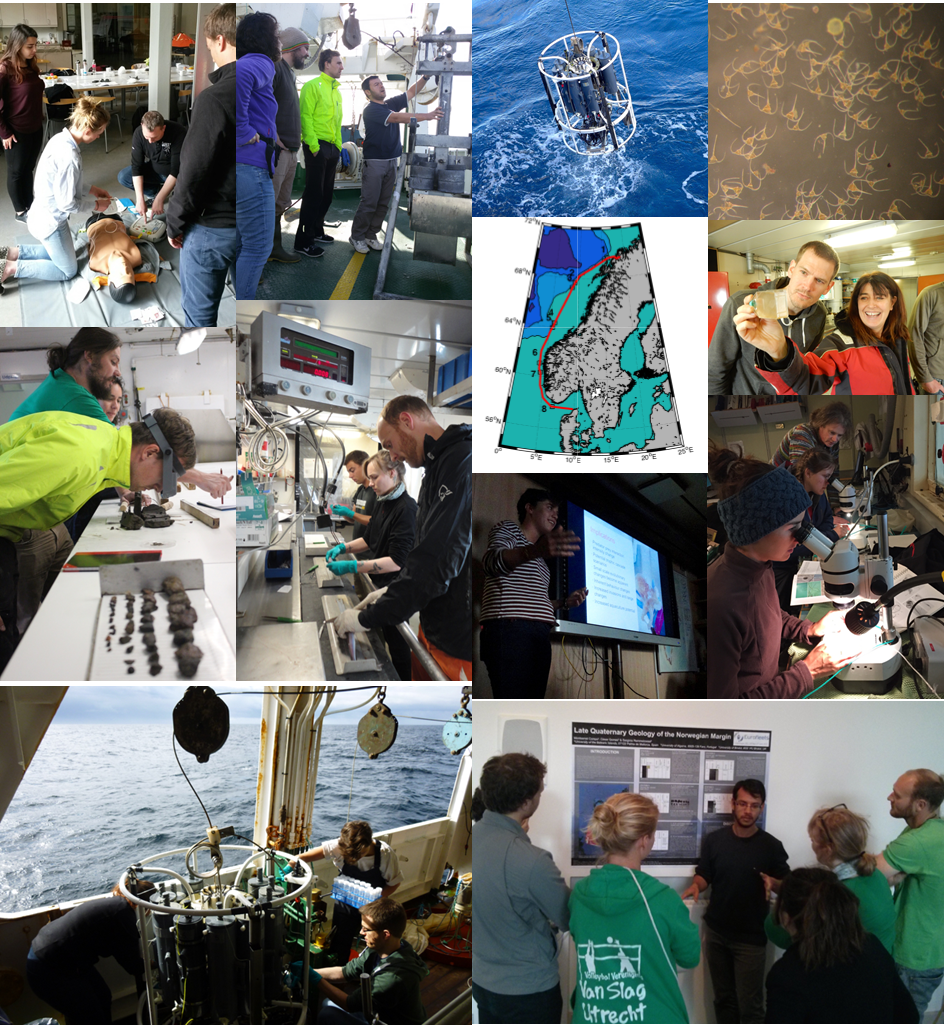
Collage of the activities carried out during the course: first aid and safety at sea training; CTD and plankton sampling; surface sediment characterisation; measurement and identification of fish catch; plankton microscopy; nutrient sampling and poster presentation of results.
|
For more information visit students blog
Download the cruise posters:
Biology [PDF]
Chemistry [PDF]
Fisheries [PDF]
Geology [PDF]
Physics [PDF]